October 13, 2026
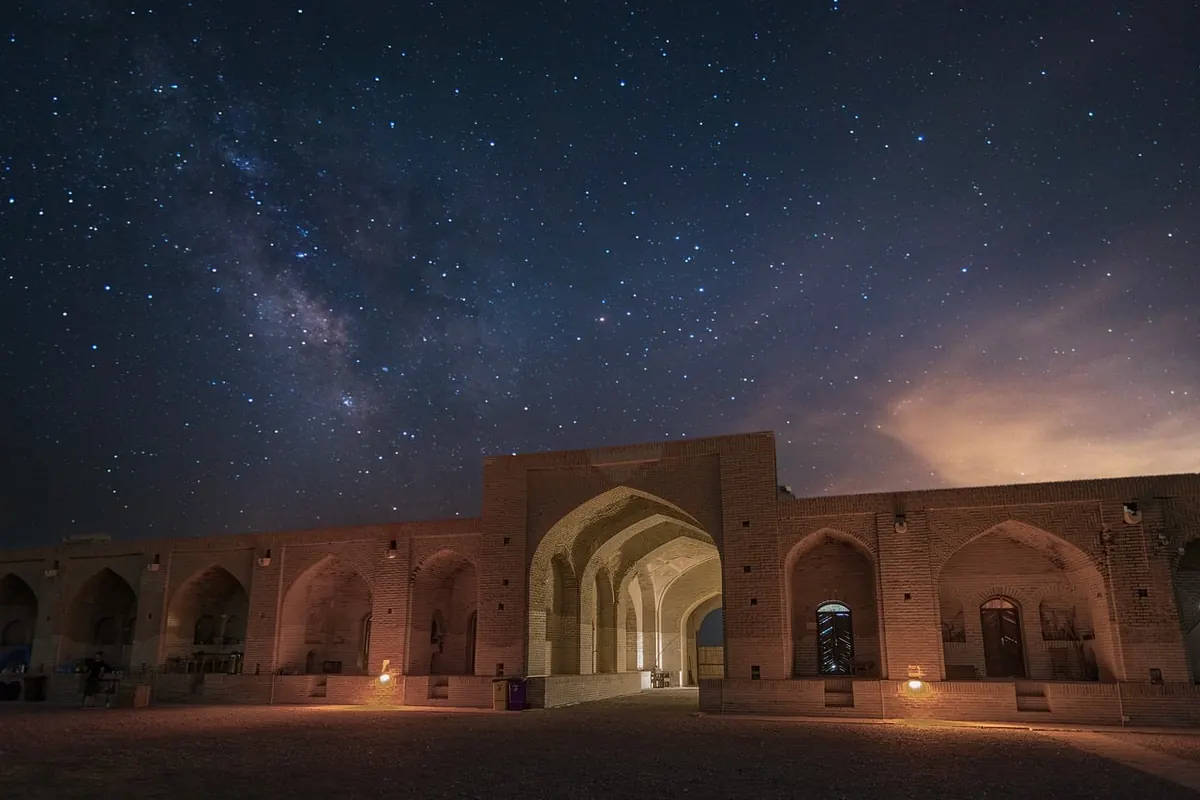
The Moon rewards preparation more than enthusiasm. A first-time observer can burn forty minutes fighting a tripod, fogging an eyepiece and missing the best hour of the night, then come back inside convinced the sky is boring. It never is. The difference is usually three decisions made in daylight: when to go out, what to carry, and where to stand.
What changes with the seasons is not the Moon itself but everything between you and it — the air, the temperature, the length of twilight, the ground under your boots. Read the checklist below in the afternoon, while the kettle is on. Make three choices, pack one bag, and leave the rest to the night.
Start With the Moon's Own Calendar
The Moon keeps an inconvenient schedule, and half of all disappointing first sessions come from walking out at eight o'clock on an evening when the Moon rose at two in the afternoon and set before dinner. Before you touch a telescope, look up the rise time, the set time and the phase. Those three numbers decide whether your evening works at all.
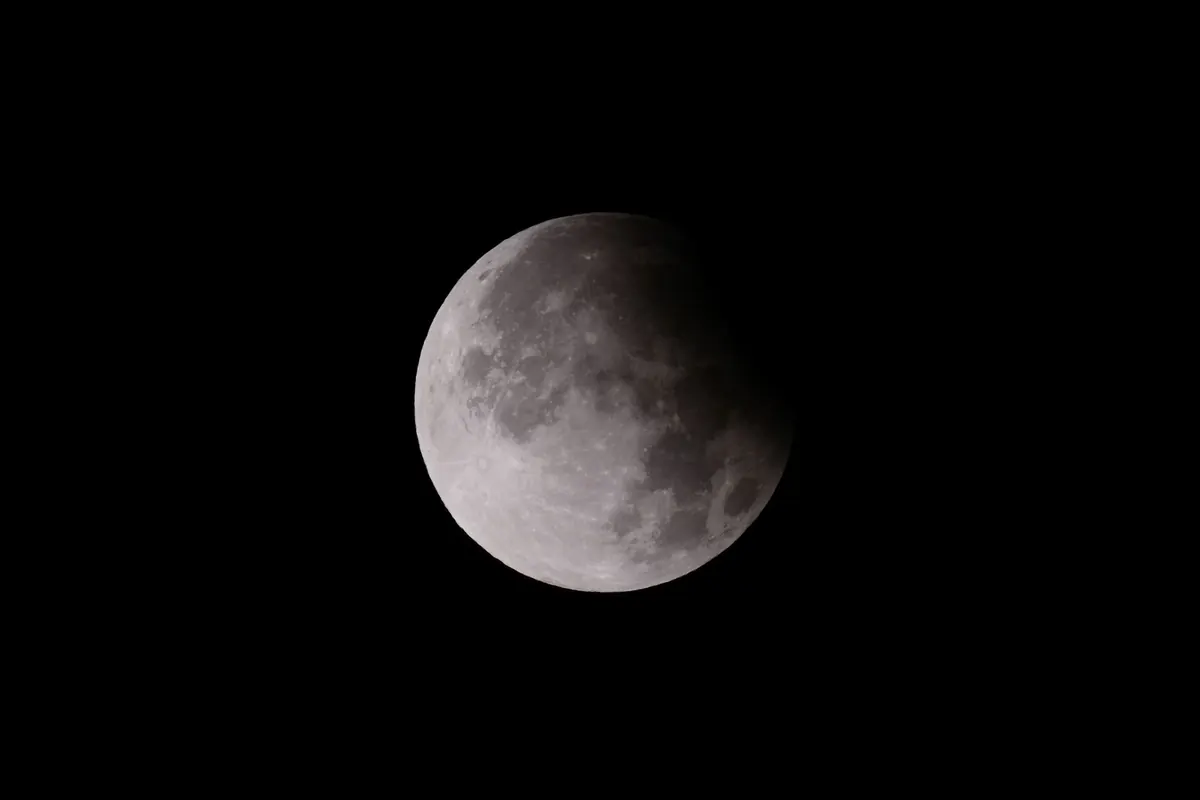
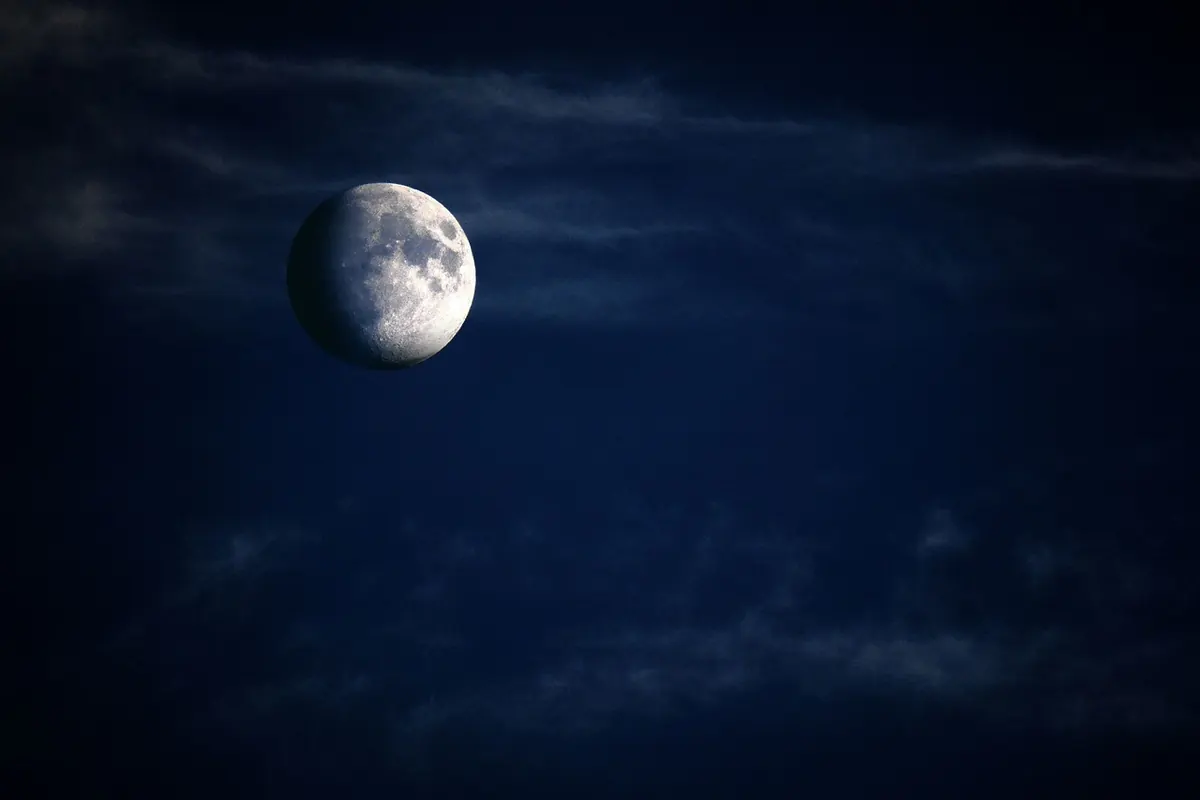
A full moon rises around sunset and stays up all night, which makes it the easiest target for a beginner, though its glare flattens the craters. A first quarter moon stands high in the south at sunset and sets around midnight, with the terminator — the day-night line — slicing through the best-known features, throwing long shadows that make even small craters look three-dimensional. Waxing crescents hang low in the western twilight for an hour or two and show earthshine: the Moon's dark side faintly lit by sunlight reflected off our own planet. Waning phases belong to night owls and early risers.
Remember that the Moon rises roughly fifty minutes later each night. A perfect viewing window on Tuesday is nearly an hour later on Wednesday. Write down four things before you go out: rise time, set time, phase, and one feature you actually want to find. Add a fifth if something temporary is happening — an eclipse, a close pairing with a bright planet, an occultation, or a perigee full moon, which looks noticeably larger than an apogee one to the naked eye.
Read the Sky, Not Just the Forecast
A cloud percentage on a weather app tells you very little. Astronomers separate two things that behave independently. Transparency is how much light gets through: haze, humidity, smoke, dust and pollen all steal it, dimming fine lunar detail and washing out the stars you use to navigate. Seeing is how much the air wiggles: the jet stream, a warm rooftop, a road that has been in the sun all day. Poor seeing turns the Moon into a pot of boiling water. Poor transparency just makes it dim and soft.
Each season tilts the balance differently.
- Winter — long nights and often steady air, which is why patient observers do their best high-magnification work when it's freezing. The cost is frost, numb fingers and fast-forming dew. Also: heat pouring out of a window will destroy the view, so set up outside rather than observing from a warm room.
- Spring — pollen and dust cut transparency, and the air is often unsettled. Crater detail still holds up on good nights; wide lunar landscapes look grainy through the haze.
- Summer — twilight lingers, humidity climbs and mosquitoes arrive in shifts. The steadiest hours are usually after midnight, once the ground has stopped radiating the day's heat.
- Autumn — frequently the kindest season: earlier darkness, cooler and clearer air. Fog pooling in valleys is the usual trap, so a modest hill beats a pretty hollow.
Two quick checks worth doing. First, compare the forecast temperature with the dew point: when they sit within a few degrees, assume dew is coming and plan for it. Second, look at where you intend to stand. Grass cools quickly and behaves well; pavement, gravel and flat rooftops hold heat and stir the air above them for hours after sunset.
Build the Kit in Two Layers
Sort your gear into a core layer that never changes and a seasonal layer that does. Packing is faster, and you stop arriving at a dark site without the one thing you needed.
The core kit
- Binoculars or telescope, plus one low-power and one medium-power eyepiece — nothing more on a first night
- Red-filtered headlamp or torch, with spare batteries tested at home
- A printed or laminated Moon map, because screens ruin your night vision
- A folding chair or stool, and a small table or mat for charts
- Notebook and pencil; sketches teach you more than photographs early on
- Phone charged, with a sky app ready but brightness turned right down
The seasonal layer
- Cold months: hat, gloves with fold-back fingertips, thermally insulated boots, a flask, a spare pair of socks, and a cloth or dew shield for the eyepiece
- Warm months: insect repellent, water, a light long-sleeved layer for the hour when the temperature drops, and a cloth for humidity
- Any wet season: a lightweight cover for the scope, and something dry to sit on
The Twenty Minutes That Decide the Night
Most of the friction happens in the first quarter of an hour. Take it in a fixed order and the rest of the session runs itself.
- Set the telescope outside twenty to thirty minutes before you plan to start, so the optics match the outdoor temperature. A warm mirror or lens never gives a sharp image.
- Roughly align the finder and focus on a distant streetlight or chimney while there's still light. Doing this in the dark is the single most common beginner frustration.
- Give your eyes twenty minutes without white light. Phone screens, porch lights and car headlights reset the clock; red light does not.
- Keep everything in one bag or box so nothing is searched for by touch. A headlamp on red beats a phone torch every time.
- If you're driving to a dark site, tell someone where you're going and when you expect to be back.
Safety Basics for First-Timers After Dark
Observing is a standing-still activity in the cold and in the dark, which is exactly the combination people underestimate.
- Cold: dress for a temperature several degrees lower than the forecast, keep your hat on, and take breaks indoors if you start shivering or your fingers stop working properly. Alcohol makes you feel warmer while genuinely increasing heat loss, so keep it for afterwards. If you have a heart or circulation condition, it's worth asking a doctor how much cold-weather exposure is sensible for you.
- Trips and falls: tripod legs and cables are invisible at night. Set the tripod where you won't walk through it, and walk with a red light rather than in total darkness.
- Ground and permission: know the terrain before it's dark, avoid cliff edges and uneven ground, and check whether a park, car park or field actually allows night access. A gate that was open at dusk may be locked at eleven.
- Company: a remote site is better with a second person. If you go alone, share your location and stay where you have phone signal.
- Neighbours: from a balcony or garden, be aware of where the tube is pointing. A telescope aimed casually at a lit window causes unnecessary trouble.
A Five-Minute Pre-Flight Check
Before the door closes behind you, run through this and you'll have covered the things that actually ruin nights.
- Is the Moon above the horizon for the hour I plan to be out, and in the phase I expect?
- Forecast checked for cloud, dew point and wind — and will I be standing on grass rather than concrete?
- Core kit packed in one bag, batteries tested, red light working?
- Scope out early, finder aligned, one target chosen?
- Layers, hat, gloves, water, and someone knows where I am?
That's the whole discipline. None of it requires expensive equipment, and almost all of it happens before sunset. Do it once or twice and it becomes a habit you no longer think about — which leaves you free to do the only thing that matters on a first night: stand still, let your eyes adapt, and look long enough for the Moon to stop being a bright disc and start being a place.
Photo: akbarnemati / Pixabay